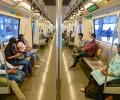
All central government employees have been asked to attend office on working days, according to a Personnel Ministry order.

A new survey reveals how dating preferences changed drastically during the lockdown.

'This (opposition to the project) is not just architects, but everyone needs to know more.' 'We need to be allowed to participate, maybe, you can ignore what we have to say, that's your decision.' 'At least follow the process.

The company, which has recently made a foray into the frozen food segment under ITC Master Chef brand targeting both retail and food services players, is also planning to expand its reach to over 30 cities in the retail segment and 100 cities in food services segment during the period. ITC will be the third major organised player in the frozen food segment after McCain, which is mainly in the vegetarian segment and Venky's, which is in non-vegetarian.

Flipkart's Big Billion Days festive sale started on Oct 13.

Analysts, however, suggest investors remain selective on realty stocks and buy only where there is revenue visibility and a credible promoter backing.

Behold the breathtaking winning and shortlisted images from one of the world's most prestigious photography contests. The amazing shots are from the open competition of the Sony World Photography Awards 2020, which received 193,000 entries from photographers in over 200 territories. Scroll down and feast your eyes on our pick of the shortlisted and category-winning entries.

Under the emergency plan, stringent actions are implemented based on the air quality of the city.

Omkeshwar Singh, Head, Rank MF, a mutual fund investment platform, answers your queries.

In accordance with ''Level-1'' alert under the graded response action plan (GRAP), private offices will function with physical attendance of 50 per cent of the staff, barring essential categories.
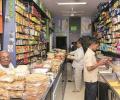
The demands from retailers are fourfold: One, allow kiranas, general trade stores, supermarkets, hypermarkets, and wholesalers to operate every day of the week till 9 pm. Two, ensure uniform and regular opening of all categories of retail. Three, hassle-free movement of goods and employees, and four, lift bans on malls in states like Maharashtra.


With the number of coronavirus infections declining in the country, industry chamber FICCI has suggested the government to follow a graded approach in unlocking economic activities. The chamber has suggested opening up of economic activities depending upon the positivity rate of COVID-19 cases in that region or district. It has divided regions at four levels - minimal risk, low risk, medium risk and high risk. It has asked for opening e-commerce supplies for both essential and non-essential activities in all districts irrespective of the positivity rate, besides home delivery of alcoholic beverages, logistics, warehousing and all cargo movement.
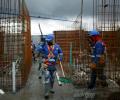
While there were Rs 7.01 trillion worth of new assets in December 2019, this fell 88.6 per cent to Rs 80,000 crore for the three months ending December 2020, shows data from project tracker Centre for Monitoring Indian Economy (CMIE), reports Sachin P Mampatta.

Reliance Retail has bought a 25.8 per cent stake in Dunzo, India's leading quick commerce player, for $200 million (around Rs 1,488 crore) as it looks to expand its presence in online grocery delivery business. Dunzo has raised $240 million (about Rs 1,787 crore) in its latest funding round that was led by Reliance Retail Ventures Ltd (RRVL) - the retail arm of Reliance Industries, the two firms said in a statement. Existing investors Lightbox, Lightrock, 3L Capital and Alteria Capital also participated in the funding round.

'Both of us are not politicians. We were forced to enter politics to counter corruption that is looting the country.'

The air quality in Delhi remained poor Sunday with drop in wind speed even as authorities predicted further fall in air quality index of the national capital in the coming days.

'You could have an additional pool of 15,000-odd qualified and competent doctors.'

Amid fresh COVID-19 concerns, Karnataka government on Sunday decided to impose 'night curfew' for 10 days from December 28, between 10 PM and 5 am.

The central government said the railways and civil aviation ministry must suspend all concessional travel on trains and flights, except for students, patients and disabled people.
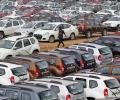
While customers in metro cities are still buying cars, quick growth is likely only from upcountry markets, where highways and roads are being built, and discretionary income and aspirations are rising.

Once the 21-day lockdown is lifted, which may happen in phases, those who have been contemplating purchasing a car may actually do it, said analysts. Thanks to social distancing norms and rising hygiene awareness, daily commuters may ditch public transport and shared mobility solutions like Ola and Uber. Many are likely to prefer the confines of a car over roughing it up in crowded public transport services such as a metro, local sub-urban trains and buses, they said.
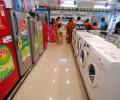
The industry is expecting double-digit growth on a year-on-year basis, helped by a possible price correction after softening of raw material inputs and factors such as positive sentiments, pent up demand and improving economic conditions. Besides, a shift in consumer behaviour from price consciousness towards technologically advanced premium products with quality, value proposition and safety aspects leading to a rise in demand for home automation products is making the industry upbeat. With the government's production linked incentive (PLI) scheme for white goods, which has witnessed a committed investment of Rs 4,614 crore, in place, many manufacturers are gearing up to make the most out of the opportunity as well as take steps towards reducing their dependency on imports and make products more affordable.

In October, OnePlus said, it recorded Rs 500 crore of revenue in only the first two days of the festive sale on Amazon.in. The firm is looking at going beyond the metro cities by scaling up its offline stores to over 5,000 and setting up more than 100 'experience centres' in the top 50 cities by next year.

The apex court asked the government to get back by March 9 about the policy.
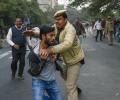
The students have been protesting against hostel fee hike. They had sought appointment with the Prez.

The online channel has only been successful in making inroads in metro cities.

The consumer buying patterns and preferences have changed significantly with categories like health and pharma, FMCG and agriculture seeing a surge and exponential growth along with the rising number of first-time online shoppers.
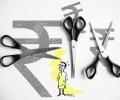
You can reduce your tax burden by wisely using partially taxable allowances, suggests Bindisha Sarang.

Colgate-Palmolive India is placing greater emphasis on freshness, whitening, therapeutic, and family toothpastes, as rivals such as Dabur and Patanjali dominate the growing naturals segment of the market. Once under 5 per cent of the Rs 10,000-crore domestic toothpaste market, the naturals segment, which includes ayurvedic and herbal variants, is now 25-30 per cent of the market, industry executives said. Growth rates of the naturals segment are estimated to be in the region of 8-9 per cent in volume terms. In value terms, the growth rate for naturals is around 10-12 per cent, sector experts said.
'90 per cent of the food and grocery business is still with the kiranas.' 'If kiranas are not allowed to operate, it becomes a serious issue.'
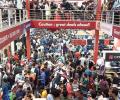
Brand Factory clocked in Rs 1,045 crores worth of sales in FY17, accounting for 27 per cent of the total revenues earned by Future Lifestyle Fashions Retail. But what about the future?

Parents always want to give the best to their children.

With COVID cases declining, Delhi will see further relaxation in lockdown, including reopening of markets and malls and resumption of metro services, from June 7 while Maharashtra will implement a five-level plan to ease curbs based on weekly positivity rate and occupancy of oxygen beds in districts.

Delhi recorded an air quality index of 315 at 11:10 am. The last time the air quality hit such a poor level was in February.

Other Graded Response Action Plan measures like ban on diesel generators, hot mix plants, stone crushers and brick kilns, however, continue to remain in place.

With an epic battle of billionaires for supremacy in one of the world's most prolific markets and a pandemic-propelled surge in online shopping in the background, India's nearly trillion-dollar retail market is hoping to touch 85 per cent of the pre-COVID business in the first half of the New Year. In a year when the COVID-19 carnage ripped apart the retail business, circa 2020 will best go down for the unravelling of the war between Jeff Bezos, the world's wealthiest man, and richest Indian Mukesh Ambani for pre-eminence in the booming market that is estimated to reach $1.3 trillion by 2025. It all started with Ambani's Reliance Industries agreeing in August to buy assets of the nation's second-largest retailer for Rs 24,713 crore, just a year after Bezos' Amazon purchased an indirect stake in the indebted Future Retail.

With a focus on top 4-6 metro cities, the company on Wednesday unveiled its first 'Adidas Originals' outlet here as it plans to open half-a-dozen more such stores in next one year.
ITC has extensively reset its strategy and will explore opportunities to craft disruptive business models to set up structural drivers helmed by digital and sustainability for its next horizon of growth and make the company future-ready, chairman Sanjiv Puri said on Wednesday. The company is pursuing an accelerated journey to build a dynamic utureTech' enterprise by investing in cutting-edge digital technologies to shape a new paradigm of competitiveness, create innovative business models and tap newer opportunities, he said while addressing shareholders at ITC's virtual annual general meeting. As part of the next horizon vision, the company is "proactively exploring inorganic opportunities" even as it has shrunk "business segments that were incongruent to our growth aspirations, such as the Lifestyle Retailing Business" while the existing growth platforms comprising megabrands will be scaled up and fortified.

The air quality in Delhi is turning worse, Deputy Chief Minister Manish Sisodia said.
 © 2026 Rediff.com - Advertise with us - Disclaimer - Privacy Policy - Sitemap - Feedback - About us - Terms of use - Grievances